Social Robots for Education

About this research line

We explore how social robots can transform educational environments by acting as interactive tutors, learning companions, and classroom assistants.

Social robots can leverage natural language processing, emotional intelligence, and adaptive behaviours to engage with students in ways that feel intuitive and supportive. Integrated into classrooms, social robots can personalise learning experiences, provide real-time feedback, and foster collaboration among students. As educational tools, robots can assist teachers, offer one-on-one support to students, and adapt their teaching styles to individual learning paces. For example, robots can help students with special educational needs by providing patient, consistent guidance, or act as mediators in group activities to encourage participation and teamwork.

However, integrating robots into education also raises important questions, such as the perception of robots as peers or teachers, and the ability of robots to build trust and rapport with learners. Our research addresses these challenges by combining insights from pedagogy, psychology, and robotics to create robots that are not only technically advanced but also effective and empathetic educational partners.
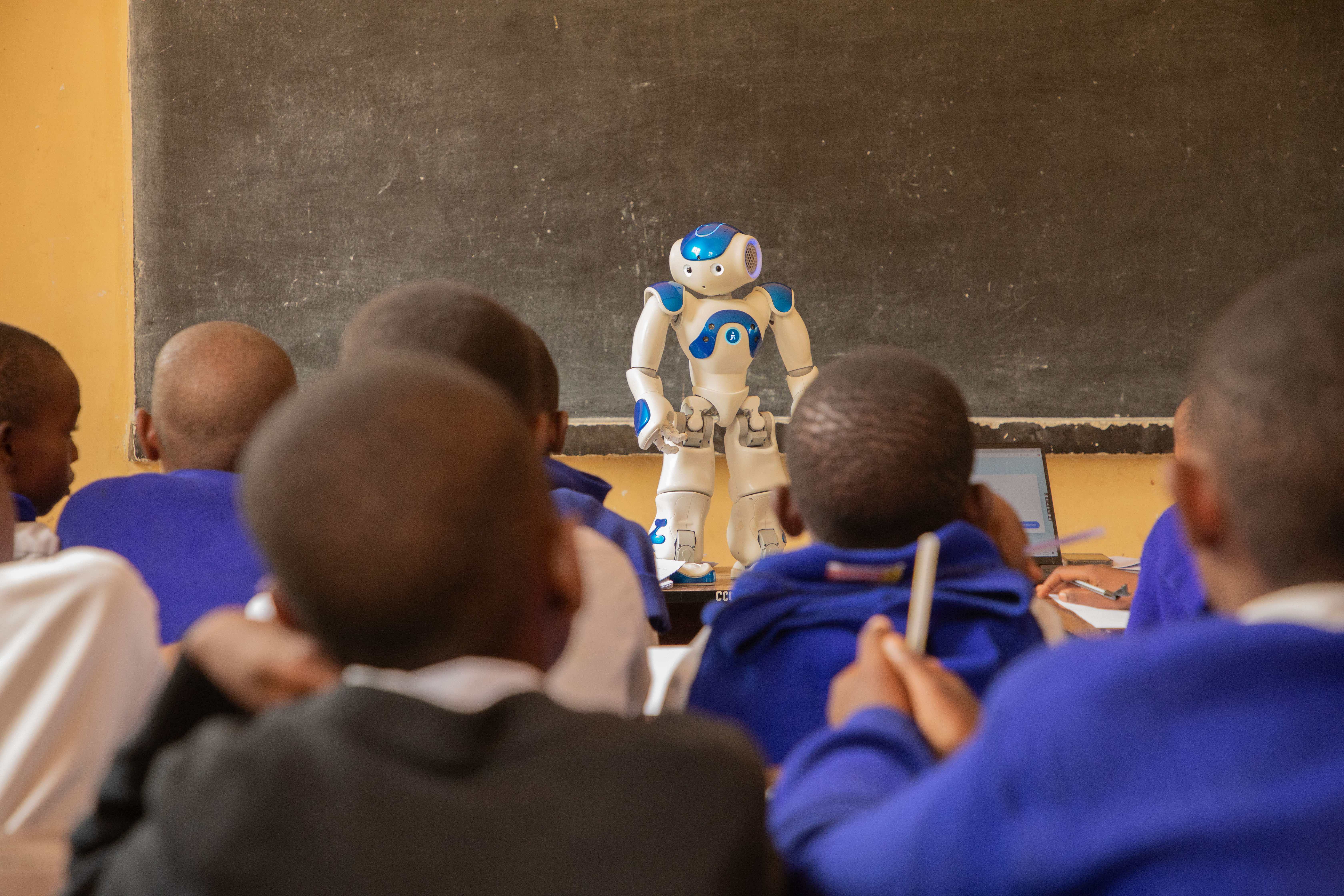
The Nao robot deployed in a classroom.

The Nao robot deployed in a classroom.

Social Robots in STEM Education

In STEM (Science, Technology, Engineering, and Mathematics) education, social robots can serve as learning facilitators, such as teachers, tutors, or peers, as well as hands-on tools to make abstract concepts more tangible. For instance, robots can guide students through math exercises, demonstrate physics principles in real time, or assist in engineering projects by providing step-by-step instructions. Interactive and engaging robots help students develop problem-solving skills and a deeper understanding of complex topics.

We apply our research in partnership with Mzumbe University in Tanzania, where we are developing social robots to support STEM education in under-resourced schools. Additional challenges include access to fast and reliable internet, which is crucial for the operation of many social robots, as well as the scarcity of contextual Swahili-language data, the primary language of instruction in public schools. Nevertheless, we are working on creating robots that can function effectively in low-resource settings, ensuring that students in these areas can benefit from the advantages of social robotics in education.
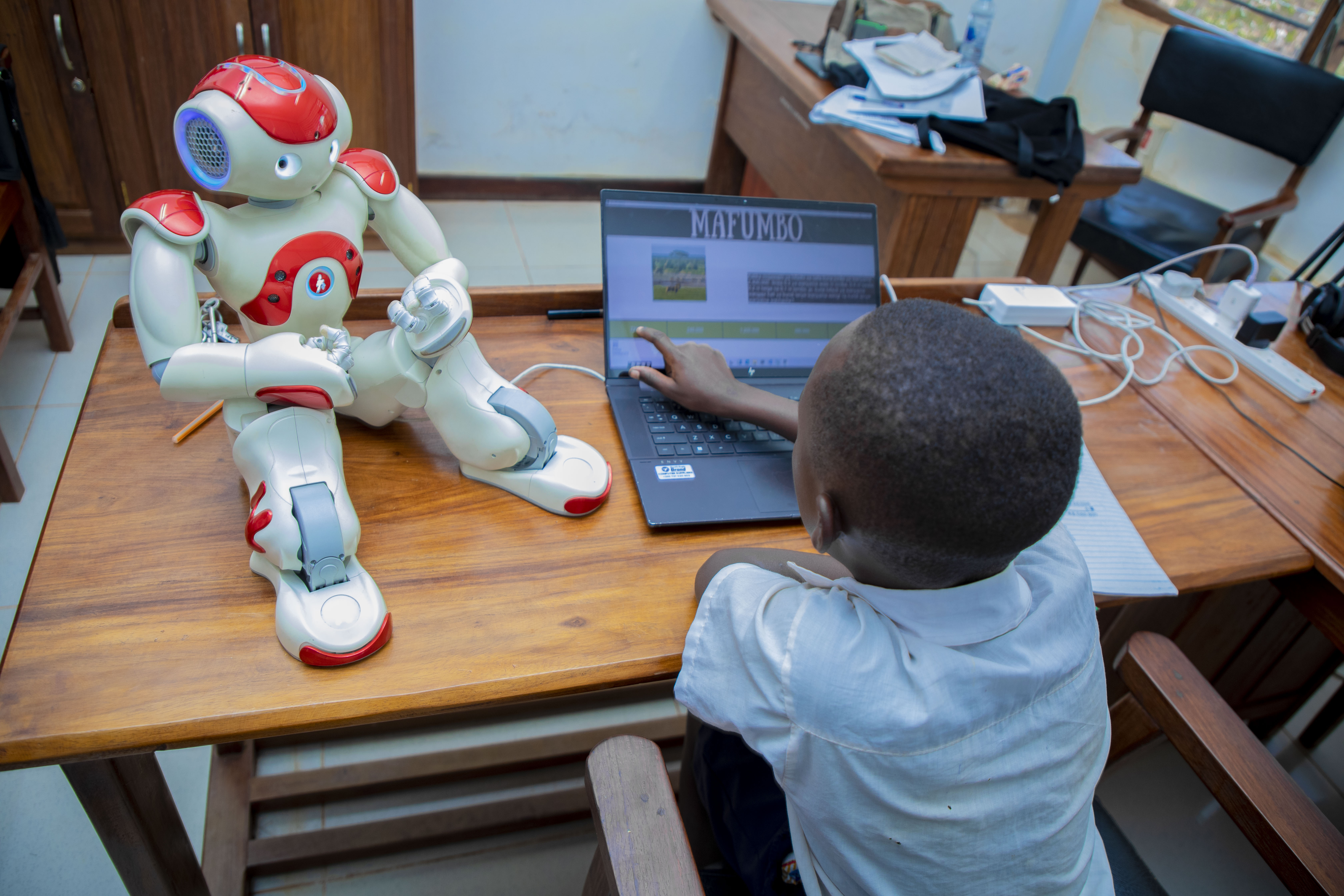
The Nao robot engaged with a student in a STEM activity.
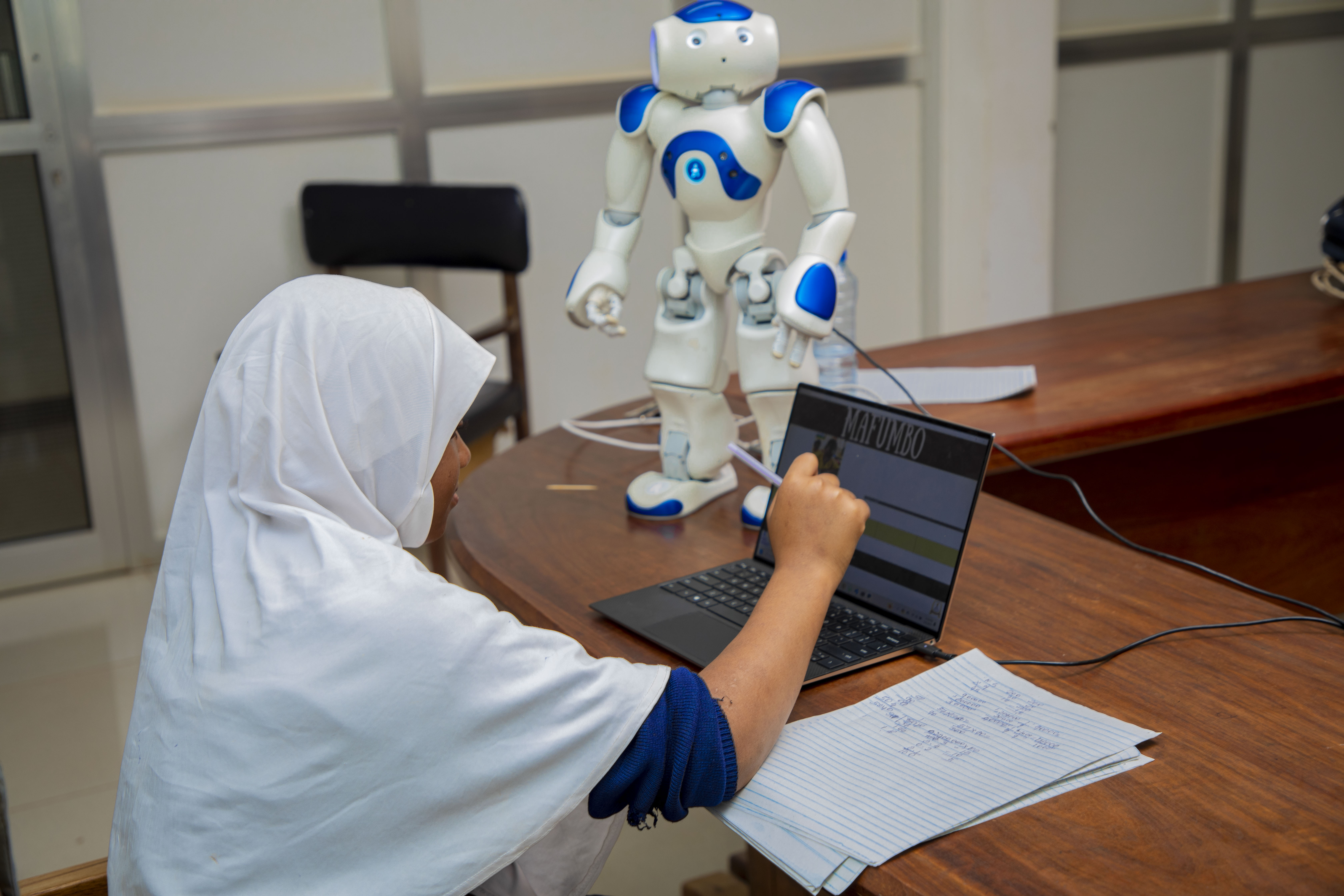
The Nao robot engaged with a student in a STEM activity.

Graphical interfaces can support the learning activity.

Graphical interfaces can support the learning activity.

Social Robots in Second Language Learning

Learning a second language often requires consistent practice and exposure to native-like interactions. Social robots can provide this by engaging learners in conversations, correcting pronunciation, and offering cultural context; all in a low-pressure, supportive environment. For example, a robot can act as a language partner, simulating real-world dialogues or role-playing scenarios to help students build confidence and fluency. This is especially beneficial for learners who may not have access to native speakers or language immersion opportunities.

Our work focuses on developing robots that adapt to the proficiency level of each learner, provide personalised feedback, and create immersive language-learning experiences. Combining speech recognition and natural language understanding, with text, audio, and images, these robots aim to make language learning more accessible, enjoyable, and effective for students of all ages.

A social robot in an interactive storytelling session.

A social robot in an interactive storytelling session.

Active researchers

Related publications

'Habari, colleague!' : a qualitative exploration of the perceptions of primary school mathematics teachers in Tanzania regarding the use of social robots

Edger P. Rutatola, Koenraad Stroeken, Tony Belpaeme
In APPLIED SCIENCES-BASEL 2025
BIBLIO
Abstract
Featured Application By leveraging an AI-powered social robot to enhance teaching and learning in primary schools in a low-resource setting, this study details the following: (1) the design of a conversational mathematics tutoring system, (2) users' (teachers') attitudes towards advanced technologies, (3) the importance of firsthand interactions with the system for its acceptance and adoption, (4) the positive features of the robot tutor and areas of improvement for effective interactions and tutoring, and (5) practicalities for the adoption of such technologies in schools. These can inform the design and adoption of similar human-robot interaction (HRI) systems, especially those intended for educational applications in low-resource settings.Abstract The education sector in Tanzania faces significant challenges, especially in public primary schools. Unmanageably large classes and critical teacher-pupil ratios hinder the provision of tailored tutoring, impeding pupils' educational growth. However, artificial intelligence (AI) could provide a way forward. Advances in generative AI can be leveraged to create interactive and effective intelligent tutoring systems, which have recently been built into embodied systems such as social robots. Motivated by the pivotal influence of teachers' attitudes on the adoption of educational technologies, this study undertakes a qualitative investigation of Tanzanian primary school mathematics teachers' perceptions of contextualised intelligent social robots. Thirteen teachers from six schools in both rural and urban settings observed pupils learning with a social robot. They reported their views during qualitative interviews. The results, analysed thematically, reveal a generally positive attitude towards using social robots in schools. While commended for their effective teaching and suitability for one-to-one tutoring, concerns were raised about incorrect and inconsistent feedback, language code-switching, response latency, and the lack of support infrastructure. We suggest actionable steps towards adopting tutoring systems and social robots in schools in Tanzania and similar low-resource countries, paving the way for their adoption to redress teachers' workloads and improve educational outcomes.

Large language models cover for speech recognition mistakes : evaluating conversational AI for second language learners

Eva Verhelst, Tony Belpaeme
In 2025 20TH ACM/IEEE INTERNATIONAL CONFERENCE ON HUMAN-ROBOT INTERACTION, HRI 2025
BIBLIO
Abstract
Automatic Speech Recognition (ASR) technology has been reported to reach near-human performance in recent years, yet it continues to struggle with atypical speakers, particularly second language learners. This limitation has hindered progress in leveraging social robots for second language education, a field with significant promise. Recent advancements in Large Language Models (LLMs), which demonstrate capabilities in context understanding, common sense reasoning, and pragmatics, offer a potential solution by compensating for transcription errors introduced by ASR. This study examines whether ASR combined with an LLM can produce flowing conversation. Particularly, we look at its application in learning French as a second language by Dutch-speaking students. Through task-based interactions, where successful task completion depends on the accurate interpretation of user speech, the study evaluates the impact of LLMs on conversational outcomes. Results confirm that the performance of ASR degrades significantly for both speakers with limited proficiency and a non-English language. Nonetheless, LLMs demonstrate the ability to interpret context and sustain meaningful conversations despite suboptimal ASR outputs, highlighting a promising path forward for the integration of these technologies in second-language education.

Social robots for education : a review

Tony Belpaeme, James Kennedy, Aditi Ramachandran, Brian Scassellati, Fumihide Tanaka
In SCIENCE ROBOTICS 2018
BIBLIO
Abstract
Social robots can be used in education as tutors or peer learners. They have been shown to be effective at increasing cognitive and affective outcomes and have achieved outcomes similar to those of human tutoring on restricted tasks. This is largely because of their physical presence, which traditional learning technologies lack. We review the potential of social robots in education, discuss the technical challenges, and consider how the robot's appearance and behavior affect learning outcomes.
See more